
I need to let you in on a secret that has been building for the past several years:
You, are the asset.
Let me explain…
There is a specific kind of value that most of us have been trading on for years, unbeknownst to us, that doesn’t have a name just yet so it makes it hard for us to name (and see) plainly.
This type of value isn’t the information we carry. Information, as it turns out, was never the “scarce thing;” we just live in a world where organizing and delivering it was expensive enough that it felt like the asset. You’ve seen information organization and delivery positioned and packaged as an asset play out in real life: The person who knew how to find the right research, synthesize the right sources, or produce the right report. That person had something. Or at least they seemed to.
Enter artificial intelligence.
What AI clarified, almost overnight, is that the production of organized information was never the asset. It was the overhead and increasingly a commodity.
The asset was always the lens through which information was filtered, weighted, and made meaningful. The particular way of seeing that determined which facts mattered, which patterns were worth naming, and which questions were even worth asking.
That lens has a less precise name: point of view.
And point of view, it turns out, is the last thing that doesn’t compress.
The Bundle Is Dissolving
For most of the last century, point of view was bundled inside something else: a job title, a byline, an institutional role. The bundle handled the economic question automatically. You were a senior analyst, a managing editor, a lead architect. Your perspective was part of the package, priced into your salary, delivered through your employer’s infrastructure, attributed to the institution as much as to you.
But, that bundle is dissolving.
Not dramatically and all at once, but structurally and probably permanently.
AI is absorbing the information-production layer of most knowledge work faster than most institutions are ready to acknowledge. But, whats still missing when that information-production layer has all the facts and delivers it based on your preferences isn’t what people expected to be left holding.
It’s something more personal, less legible, significantly harder to price, and often undervalued when it’s bundled with other skills.
It’s the particular way you see.
The question that’s coming for almost everyone — and has already arrived for some — is whether their way of seeing is an asset on its own, outside the institutional wrapper that used to give it context and value.
Most people have never had to answer that question because the systems we grew up inside (educational, professional, credentialing) were not designed to help us answer it. They were designed to place us inside institutions that would answer it for us.
But when that arrangement, a job, becomes less reliable asking this question becomes less optional.
This Has Happened Before
The structural problem isn’t new. What’s new is the scale of who it’s now reaching.
In the early decades of broadcast media, a version of this same question surfaced and got partially answered. Radio networks, then television studios, discovered something counterintuitive: the scarce thing wasn’t the signal or the schedule or even the production.
It was the voice.
The particular human sensibility that could organize the world into something an audience wanted to return to; not for information, but for interpretation.
The nightly news anchor wasn’t valuable because he had access to facts the audience didn’t. By the time a broadcast aired, the facts were everywhere. He was valuable because of the specific gravity he brought to which facts mattered, in what order, with what weight. That gravity was accumulated over years of living and working inside the field. It couldn’t be replicated by swapping in a different face. It was, in the language we’re reaching for now, a point-of-view asset.
Early media institutions understood this instinctively, even if they didn’t have a clean framework for it. They built licensing relationships around it. Syndication deals. Column rights. Creative ownership structures that recognized the interpretive work as distinct from (and more valuable than) the informational work it was wrapped around.
The music industry traced a similar arc, a few decades later. In the early recording era, the people whose creative sensibility was the actual product; the songwriters, the arrangers, the producers who could hear what a song needed before it existed were routinely compensated as laborers. Flat fees and work-for-hire arrangements were the norm and once a transaction commenced, an asset was transferred and the relationship concluded.
It took years and a generation of people who understood too late what they’d traded —before the industry developed structures that more accurately reflected what was actually being exchanged.
Royalty models. Publishing rights. Retained ownership with licensed access.
This wasn’t just an economic shift it was actually a reclassification from: “This is a service you performed.” To: “This is an asset you created and the terms of access belong to you.”
Every time this pattern has played out, the sequence is roughly the same. A new distribution technology arrives and temporarily makes delivery the scarce thing. The people whose perspective is the actual value get priced as laborers because the vocabulary for pricing them as asset owners doesn’t exist yet. Eventually, someone names what’s actually being exchanged and the terms restructure.
The people who held on to ownership benefit, the people who transacted too early don’t.
We are early in that sequence right now. And this time, the distribution technology is AI which means the reclassification question isn’t arriving for a small class of media professionals. It’s arriving for nearly everyone.
I’ve Been Inside This for Twenty Years
In 2007, I was writing for Black Web 2.0; a publication I built with a specific lens on technology and culture. Looking back on it now it wasn’t really a news site. It was something closer to a running intellectual argument about how technology was reshaping power, who it was including, who it was leaving out, and what those patterns meant underneath the product announcements.
One day, I wrote about an idea I had: an accelerator specifically for underrepresented founders. Not a commentary on what should exist — a concrete proposal for what I was going to build. A journalist found the post. The Wall Street Journal’s VentureWire picked it up. A producer at CNN saw it and reached out.
What followed was a CNN documentary, and then NewME — the first accelerator for underrepresented founders in Silicon Valley. Over time, I helped the entrepreneurs who came through it raise over $250 million in venture capital. The infrastructure I built attracted Goldman Sachs’ recognition, a Fast Company honor, media coverage across Bloomberg, Forbes, and the Wall Street Journal.
But here’s the biggest secret: None of it started with a pitch deck.
It started with a blog post. A point of view, made public, distributed by the right platform to the right person at the right moment.
What I understand now, looking back, is that I was already operating in the asset model; I just didn’t have the full vocabulary for it yet. The practice was ahead of the theory.
At Black Web 2.0, we didn’t just publish. We entered a content licensing agreement with BET.com; providing our technology content in syndicated form alongside original work. We were licensing our point of view to a major platform that wanted our specific lens on the industry, not just our words. That’s not a writing contract. That’s a POV asset being accessed on negotiated terms by a distribution platform that recognized it had value they couldn’t replicate internally.
When I built NewME, the same logic played out at a larger scale. When the time came to exit, what transferred wasn’t a list of alumni, a collection of pitch decks, or even an equity portfolio (I retained that for myself). The acquisition bundled our brand, our framework, our operations, our codebase, and our network: the social accounts, the email lists, the relationships. It was an intellectual property acquisition. The asset being valued wasn’t what we’d done. It was the infrastructure of a recognizable way of seeing and doing something that had accumulated enough distinctiveness that another organization was willing to pay to own it, not just access it.
Then Streamlytics took the thesis to its most explicit form. We built a system that helped people understand what their personal data was actually worth; the data they were generating on popular platforms without any mechanism for understanding or capturing its value. I created an algorithim that priced the data fairly and appropriately based on the market cap of the originating platform (among other things), then standardized and anonymized it, and sold the resulting insights through data licensing agreements. What made it valuable to the companies that bought it wasn’t just the data itself. It was the correlation layer. The insights on taste and point of view, surfaced through volume and pattern recognition in a way early data providers couldn’t offer, sourced ethically through first-party partnerships with the everyday people generating it.
We were building a market for a type of asset that didn’t have a market yet.
The pattern across all three is the same one I’m describing in this essay. Each time, the thing being transacted was interpretive value: a particular way of seeing, organizing, and weighting information that couldn’t be cleanly separated from the people and frameworks that produced it.
Each time, the structure of the deal had to be invented to fit the asset, because the existing models were built for something different. And each time, the people who understood what was actually being exchanged — and structured the terms accordingly — ended up holding something that compounded rather than depleted.
I wasn’t learning this in hindsight. I was building it in real time, before the vocabulary existed to describe what I was doing. Which is, I think, exactly how this kind of transition works.
The Mistake Being Made Right Now
I built three businesses on the asset model before anyone had named it. Which is why I can see clearly what’s happening right now; and why it looks exactly like what almost swallowed an earlier generation.
AI companies, in building and refining their models, need something that doesn’t appear in any training dataset: the accumulated judgment of people who have spent years or decades living inside specific fields. Not the textbook knowledge; the models have that. What they need is the layer on top: the pattern recognition that comes from having been wrong enough times to know which signals matter. The interpretive weight that can only develop through genuine immersion.
So they hire subject matter experts. Physicists, lawyers, historians, clinicians, specialists of every kind. And they compensate them by the hour.
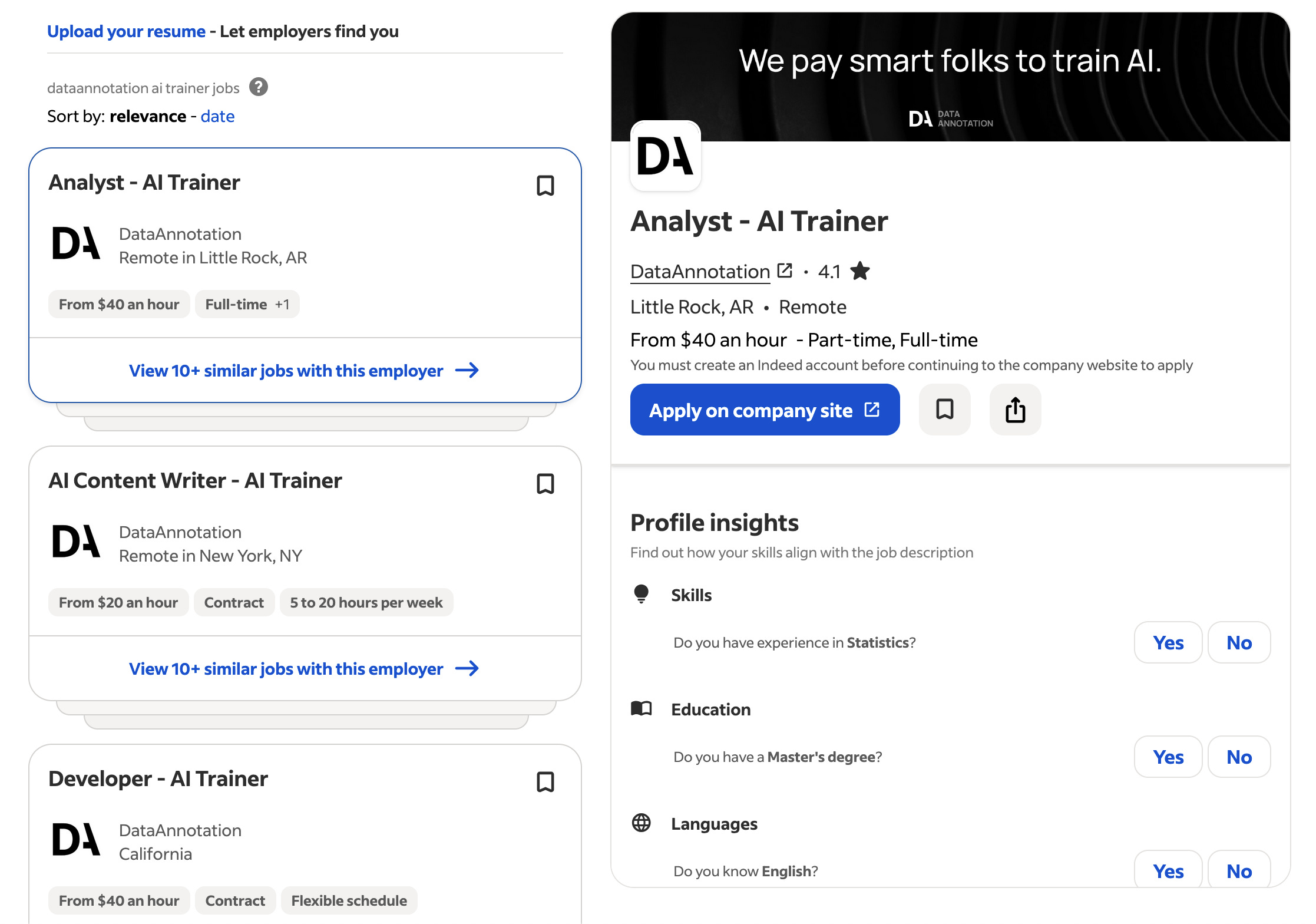
This is the category error.
What’s being extracted in those sessions isn’t time. It isn’t even knowledge in the raw sense. It’s the distilled residue of a working life; the part that can’t be separated from the person who accumulated it, priced, and handed over in an afternoon. The terms of the transaction classify it as labor. What’s actually being transferred is something much closer to an asset.
The cost of getting this wrong isn’t abstract.
When you sell your time, the transaction ends. When you license an asset, the relationship continues — on terms you set, for uses you approve, with value that doesn’t deplete because you gave it once. One model leaves you with an afternoon’s pay. The other leaves you with ongoing participation in the value your perspective generates.
The people transacting by the hour right now are doing what the songwriters did before anyone had named what they were actually holding. Not because they’re naive; because the vocabulary doesn’t exist yet, the legal structures aren’t built, and the cultural norm is still labor pricing for what is actually asset value.
That will change. It always does. The question is whether you’re on the right side of it when it does.
The Infrastructure Problem Nobody Is Talking About
Here is the part of this argument that took me longer to see, and that I think matters more than it’s currently getting credit for.
If point of view is an asset — if the accumulated, distinctive way you see and interpret and organize the world has genuine economic value — then it needs somewhere to live that you own. Not rent.
Most people’s professional presence lives on platforms. LinkedIn profiles, social media accounts, creator pages inside someone else’s ecosystem. These are not bad places to build an audience or a reputation. But they are structurally the wrong place to hold an asset.
You cannot set the terms of access to something that lives on infrastructure you don’t control. You cannot originate a licensing relationship from a position of tenancy. The platform owns the terms of service. The platform owns the distribution logic. The platform can, and periodically does, change both — and the work you’ve built inside it has no choice but to comply.
A domain is different. It is the closest thing to a deed that the digital world currently offers. What lives on your domain, under your name, is yours in a way that what lives on a platform simply is not. And in a world where point-of-view assets need to be licensable — where the terms of access need to be set deliberately, by the person whose perspective is the actual value — that distinction stops being about preference and becomes about structure.
There is also a dimension of this that is only now becoming visible. AI systems crawl the web constantly, absorbing content to train on, to reference, to synthesize. By default, your work — whatever you’ve published, wherever it lives — is available to that process. The assumption is access unless you’ve specified otherwise.
For people on platforms, that specification isn’t really available. The platform sets the terms with the crawlers, not you.
For people with owned domains, something different is possible.
The infrastructure exists — imperfect, early, but real — to make granular decisions about what you make available to AI systems and on what terms. Not a binary block or allow, but something more intentional:
This is public information about who I am and what I do. (Available)
These are the creative works that represent years of thinking. (Not available for training without a conversation.)
This is published analysis. (Available for reference, not for reproduction.)
That granularity mirrors exactly how a licensing relationship works in any mature asset class. Not everything is licensed the same way. Terms vary by use. The owner decides.
Most people don’t know this decision is available to them. They are already making it; by omission, by default, in favor of whoever is doing the crawling.
The Question Coming For Everyone
Here is where this stops being a story about founders and becomes something broader.
The employment model that most people have built their working lives inside of did something lowkey useful: it bundled your expertise, your judgment, your accumulated way of seeing inside a role — and the institution handled the question of how that value got priced and delivered.
You didn’t have to think of your perspective as an asset because the institution absorbed it, priced it, and distributed it on your behalf.
That bundling is becoming less stable. Not for everyone and not immediately; but structurally, and in ways that are likely to accelerate.
AI is absorbing the information-production layer of knowledge work across nearly every field. What remains when that layer is automated is precisely the thing institutions were bundling without naming: the interpretive judgment, the pattern recognition, the particular way of seeing that developed through years of doing the actual work.
For the first time, that component surfaces individually. And the people it surfaces for won’t just be the ones who already think of themselves as creators or independent professionals.
It will be the physicist, the account manager, the urban planner, the nurse practitioner; anyone whose working life has generated a genuine, accumulated point of view that was always part of the value but never the named asset.
The course economy was the first attempt to answer this question at scale. And it worked, partially — it gave people a mechanism for taking their expertise to market outside the institutional wrapper. But the model was wrong in a way that only becomes visible now. It priced point of view as information delivery. It made interpretation into a product: packaged, sold once, consumed, done.
That’s not how this asset actually works. A genuine point of view doesn’t deplete when you share it. It compounds. Every piece of work you do from inside that lens adds to the accumulated body. Every public argument you make either sharpens or refines the posture. The asset grows through use rather than diminishing.
Which means the right economic model isn’t a course.
It isn’t a subscription to content.
It’s something that reflects the compounding nature of the asset; retained ownership, terms of access that the owner sets, value that persists and accumulates rather than being extracted in a single transaction.
What We Don’t Have a Word For Yet And What I’m Building Anyway
We’ve been using “licensing” throughout this essay as a placeholder for the closest existing concept for what we’re actually describing. But I want to name the ways it doesn’t quite fit, because the places where it breaks down are where the real work needs to happen.
Licensing implies a discrete, transferable product. A song. A patent. A piece of software. Something that can be handed over, replicated, used without the original owner being present.
Point of view isn’t that.
It’s a posture accumulated over a lifetime of specific decisions, specific failures, specific obsessions that compounded into something recognizable and distinct. You can license access to work produced from inside that posture. You cannot license the posture itself.
This is more than a semantic problem. It means the economic model we build around point-of-view assets will need to be structurally different from the models we have for other asset classes. The relationship between the owner and the licensee can’t be fully transactional because what makes the asset valuable is ongoing. It continues to develop. It remains connected to a living, thinking person whose perspective keeps evolving.
There’s also a deeper question worth sitting with: what happens to a point of view when it becomes an economic unit? When you begin to think of your particular way of seeing as something to be packaged, priced, and made available does that change the seeing? This isn’t rhetorical. It’s a genuine structural risk. Incentives don’t disappear. They compound. They become the invisible architecture inside which perspective develops.
I’ve been sitting with these questions for years. But I’ve stopped waiting for the vocabulary to fully arrive before starting to build.
The thesis I’ve been developing — what I’m calling The New Internet — is that digital sovereignty isn’t a privacy preference. It’s an economic structure.
The people who own their infrastructure, own their data, and own the terms under which their perspective is accessed will be the ones who compound value in the next decade.
The people who rent their presence on someone else’s platform will keep finding that the terms change without their consent.
I’m building the tools to make that ownership possible. Infrastructure that lets creators and thinkers control what AI systems can access from their work, on what terms, for what uses. Data portability frameworks that treat your accumulated knowledge not as a liability to manage but as an asset to hold. Systems that make the compounding nature of point-of-view assets legible — and therefore licensable — in ways the current infrastructure doesn’t support.
If you want to go deeper on this in real time, I'm hosting a working session on exactly this on February 25th — how to let AI know you without letting it steal your work. Details here.
This work is informed by twenty years of watching the same pattern play out. The bloggers who published before there was a business model for it. The founders who built platforms before there was a vocabulary for what they were doing. The creators who grew audiences on rented infrastructure and discovered too late that the terms could change.
The pattern is always the same: the people who named what was actually being exchanged — before the consensus arrived, before the structures hardened — ended up on the right side of the transition.
I’m naming it now. And I’m building the infrastructure for what comes next.
This essay is part of Thinking in Public; a series working through complex ideas about technology, power, and culture in real time. If you’re building something in this space, or you’re navigating what it means to hold your perspective as an asset rather than a service, I’d like to hear from you.
If you want to go deeper on February 25th at 7pm EST I'm hosting How to Let AI Know You (Without Letting It Steal Your Work) — a live working session on building the owned infrastructure this essay describes. You can RSVP here.
Mind blowing. My head is spinning. See you Wednesday!
I missed the event. Will there be another opportunity? Thank you 🙏🏾.